With over 200 different species and a number of sub species Fritillaria are a bulb found in Asia, Europe as well as North America especially in California. These fascinating plants come in many forms and colors, are an enchanting and even addictive species to collect.
Often promoted as ‘easy care bulbs’ this is true of some species, and far from true for others.
While it is true that the North American species can be fairly well pinned down to USDA zones, this is not so easy with the Asian and European species. So forget the general ‘easy care in zone 3 – 8’ and look carefully at the individual species.
Actual bulb size varies greatly from large bulbs as big as a baseball, to small pea sized types.
List Of Fritillaria
How to Grow Fritillaria
These are a group of bulbs that grow in temperate regions Fritillaria come from Mediterranean Europe through Northern areas of Africa right trough to areas of southern China and areas in the south west of North America.
Growing Fritillaria in the Garden
Coming from such a wide area, it is difficult to provide a simple ‘how to grow’ set of instructions.
Along with this some species are simply much harder to grow in different climates and soils, however some similarities do exist.
Species such as Fritillaria Uva vulpis is regarded as one of the easier species to grow, while F. Imperials presents many growers with a challenge.
Here are our top tips for growing Fritillaria.
- All species require a well drained soil, many are suited to growing in rock gardens and crevice gardens.
- Use a very free draining potting mix with all species.
- Bulbs are best planted in autumn.
- Seed need stratification before germination will be succesful.
- Most species require protection from very hot dry summer conditions.
- Most species from the Mediterranean area grow well in full sun and require summers that are fairly dry. However not bone dry desiccated soils. In nature they are often protected by grasses and other plants.
- Some species require more shade than others, F.pallidiflora and F.camschatensis are two. However none like deep shade.
- In general, good sun from winter through spring and some shade in summer.
The popular F.meleagris likes dappled shade and moist soil, but still well drained.
Full Instructions on How to Grow Fritillaria from Seed
Buying Fritillaria Bulbs
Essentially this is an ‘online’ experience.
- Fritillaria bulbs do not cope well with being ‘out of the ground’.
- So life on the rack of a nursery, or big box is not suitable.
- A few nurseries will sell potted specimens when in flower.
- However it is generally the specialist Fritillaria nurseries that can provide the best quality bulbs.
More information
You can grow these fascinating bulbs either in the garden or containers.
Fritillaria Varieties
This is another area that is commonly generalized a little to much.
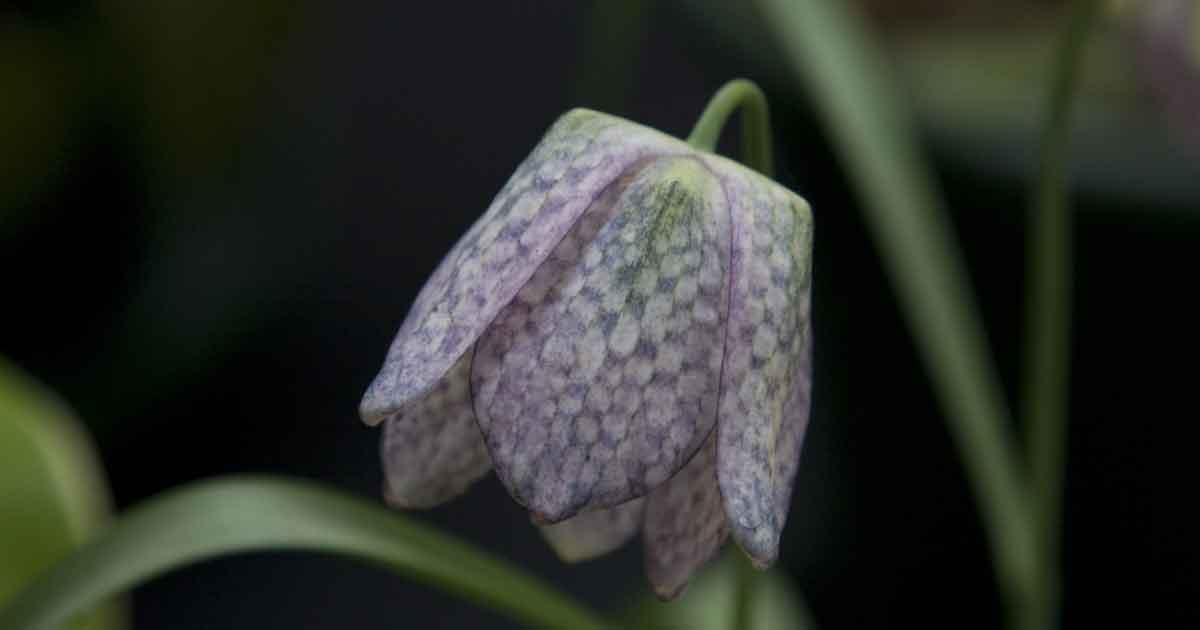
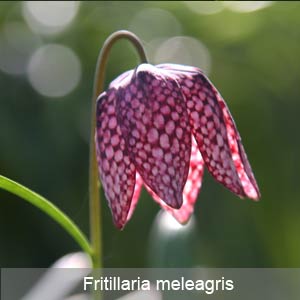
The common name ‘snakeshead lily’ (Fritillaria meleagris – pictured right) , ‘checkered lily’ and ‘guinea hen flower’ apply to only a few species.
And the wonderful ‘Crown Imperial’ can apply to a number of varieties.
For information on different species, a long with some more specific growing notes we provide individual sections for a number of popular species.